
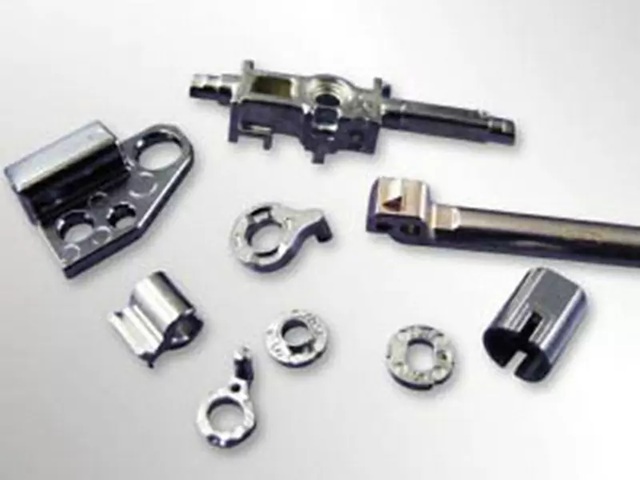
Metal injection molding represents one of those rare industrial processes that delivers advantages across multiple dimensions simultaneously, a characteristic that explains its steady expansion into sectors where compromise is not an option. The technology arrived at a moment when manufacturing faced mounting pressures: components grew smaller whilst performance requirements escalated, production volumes increased whilst tolerances tightened, and material costs rose whilst profit margins contracted. Traditional metalworking methods, each excellent within its domain, struggled to satisfy all these demands concurrently. The solution that emerged combined the geometric freedom of injection moulding with the material properties of wrought metals, creating a process whose virtues have become increasingly apparent with time.
The Strength Proposition
Among the persistent misconceptions surrounding Metal injection molding is the notion that components produced through powder metallurgy necessarily suffer inferior mechanical properties. This misunderstanding, rooted in experiences with earlier powder metal technologies, overlooks the fundamental transformation that occurs during sintering. When metal particles fuse at temperatures approaching their melting points, they form metallurgical bonds indistinguishable from those in conventional metals. The resulting density, typically exceeding 96 per cent of theoretical maximum, yields strength and ductility that rival cast or machined counterparts.
Testing confirms what theory predicts. Tensile strength values for Metal injection molding stainless steels match those of bar stock. Hardness readings fall within expected ranges for the alloy composition. Fatigue resistance, often the most demanding criterion, meets specifications for critical applications. Singapore’s Metal injection molding sector has accumulated extensive test data demonstrating that properly processed components perform reliably under conditions that would challenge any manufacturing method.
The microstructure reveals the source of these properties. Sintered components exhibit fine, uniform grain structures free from the inclusions and defects that sometimes plague castings. The absence of directional grain flow, which can create weakness in forged parts, means properties remain consistent regardless of loading direction. This isotropy proves particularly valuable in components subjected to complex stress patterns.
Dimensional Precision and Repeatability
Accuracy in Metal injection molding derives from control exercised at every stage. The process begins with powder specifications measured to exacting standards. Particle size distribution follows narrow ranges, for variation here propagates through subsequent operations. Feedstock mixing employs precision equipment that ensures homogeneity batch after batch. Injection moulding machines regulate temperature, pressure, and timing with electronic precision.
Yet the defining challenge lies in managing shrinkage. As binder is removed and particles sinter together, components contract substantially. Predicting this shrinkage requires understanding how dozens of variables interact:
- Powder characteristics including particle size and morphology
- Binder composition and loading percentage
- Injection parameters such as pressure and temperature
- Debinding method and cycle duration
- Sintering temperature profile and atmosphere
- Component geometry and wall thickness variations
Experienced practitioners develop empirical knowledge through thousands of production cycles. They understand that shrinkage rarely proceeds uniformly, that thin sections behave differently from thick ones, that material near gates differs from material at flow termini. Singapore’s Metal injection molding manufacturers have refined this understanding into predictive models that allow them to achieve tolerances within 0.3 per cent on complex geometries.
The repeatability that Metal injection molding offers may constitute its greatest virtue. Once process parameters are established and proven, subsequent production runs replicate results with remarkable consistency. This predictability allows manufacturers to commit to specifications with confidence, knowing that the thousandth component will match the first.
Mass Efficiency and Material Utilisation
In an era when material costs fluctuate and sustainability concerns mount, Metal injection molding offers compelling advantages in material efficiency. Traditional machining, whilst capable of extraordinary precision, operates through removal. A component weighing ten grammes might begin as a hundred-gramme blank, with ninety per cent becoming chips and swarf. Even with recycling, this approach consumes energy and generates waste.
Metal injection moldingv, by contrast, builds components near net shape. Material usage closely approximates finished component weight plus runners and gates, which themselves return to feedstock preparation. Waste rates typically remain below five per cent. For expensive materials like titanium alloys or tungsten composites, this efficiency translates directly to cost savings that can justify the process even at lower volumes than conventional economics would suggest.
The environmental implications extend beyond material conservation. Reduced machining means less cutting fluid consumption, lower energy usage, and decreased tool wear. The consolidated supply chain, where powder suppliers ship directly to moulders who deliver finished components, eliminates transportation associated with multiple processing steps.
Application Domains and Future Trajectories
Metal injection molding has found particular success in industries where its combination of attributes aligns with demanding requirements. Medical device manufacturers employ the process for surgical instruments that must be both complex and biocompatible. Automotive engineers specify Metal injection molding components for fuel systems where precision affects performance and emissions. Electronics producers rely on the technology for miniature connectors and shielding components where size constraints are paramount.
The technology continues evolving as practitioners push boundaries. Researchers explore new alloy compositions formulated specifically for the process. Equipment manufacturers develop machinery with enhanced control capabilities. Software tools simulate filling, debinding, and sintering with increasing accuracy, reducing the trial-and-error that once characterised process development.
Singapore’s Metal injection molding industry exemplifies how technical expertise can create competitive advantage even in high-cost environments. By focusing on applications where precision and quality command premiums, these manufacturers have built businesses that serve global customers whilst operating from one of the world’s most expensive cities. Their success demonstrates that in manufacturing, as in other human endeavours, excellence provides its own protection against commoditisation.
The trajectory seems clear. As products continue their inexorable march toward miniaturisation and complexity, as performance requirements grow more stringent, and as material efficiency becomes increasingly vital, the attributes that Metal injection molding delivers will only grow more valuable. The process that began as a laboratory curiosity has matured into an essential manufacturing technology, one whose combination of strength, accuracy, and efficiency ensures continuing relevance to industries that depend upon Metal injection molding.